
Endometriosis and Fertility
Specialist Care in Auckland
Endometriosis can affect fertility, but it does not automatically mean infertility.
Many women with endometriosis conceive — sometimes naturally, and sometimes with support. The key is understanding your individual situation and choosing the right path to pregnancy.
Dr Guy Fisher is a specialist gynaecologist in Auckland with expertise in both endometriosis and fertility care. His approach combines advanced pelvic ultrasound, laparoscopic surgery, and fertility treatment to guide the best plan for each patient.
How endometriosis affects fertility
Endometriosis can affect fertility in several ways:
Chronic inflammation in the pelvis affecting egg, sperm, and embryo function
Distortion of pelvic anatomy due to adhesions
Ovarian endometriomas affecting ovarian reserve or egg quality
Effects on implantation
In many cases, it is not a single issue, but a combination of factors.
Importantly, the severity of endometriosis does not always predict fertility outcomes. Some women with minimal disease have difficulty conceiving, while others with more advanced disease conceive naturally.
A key point: many women still conceive
One of the most important messages is that endometriosis does not automatically mean infertility.
Even in couples without endometriosis, the chance of pregnancy each month is only around 15–20%.
With endometriosis, this chance may be lower, but many women still conceive successfully — particularly with the right approach and timing.
When to investigate fertility
You may benefit from specialist assessment if:
You have known or suspected endometriosis
You have been trying to conceive without success
You have pelvic pain or painful periods
You have had previous surgery for endometriosis
You are considering IVF
Early assessment is important, as delays in diagnosis are common — often several years.
The most important question
Rather than asking:
“Can I get pregnant?”
The more useful question is:
“What is the best path for me to get pregnant?”
Natural conception
For many women — particularly those who are younger, with milder disease and a shorter duration of trying — natural conception is still very possible.
In these cases, the focus is on:
optimising timing
ensuring no other factors are being missed
Ovulation induction and IUI
In selected cases, simpler treatments such as ovulation induction or intrauterine insemination (IUI) may be appropriate.
These are typically used in milder disease and when other factors are favourable.
IVF
IVF is often the most effective pathway to pregnancy in endometriosis.
It works by bypassing many of the challenges associated with endometriosis, including inflammation and distorted anatomy.
IVF is particularly useful when:
time is a factor
ovarian reserve is reduced
previous treatments have not been successful
Individualised care
Endometriosis and fertility require a tailored approach.
Some patients benefit from surgery before trying to conceive. Others may proceed directly to fertility treatment. In many cases, a combination of approaches is used.
This is exactly the process that is worked through in consultation — combining diagnosis, clinical judgement, and your goals to create a clear plan.
The role of ultrasound in endometriosis and fertility
Specialist endometriosis ultrasound plays a key role.
This is not a standard scan — it is a targeted assessment looking for:
Deep endometriosis
Ovarian endometriomas
Adhesions and reduced organ mobility
Subtle features of superficial endometriosis
Associated conditions such as adenomyosis
In experienced hands, this allows disease to be identified and mapped before surgery is considered.
A normal scan does not completely exclude endometriosis, particularly more superficial disease.
Pathways to pregnancy
There is no single pathway. The right approach depends on your situation.
I’ve briefly outlined some of the options below:
Surgery
Surgery can play an important role, particularly when:
There is significant pain
Pelvic anatomy is distorted
Deep endometriosis is present
The diagnosis is unclear
Surgery may improve the chance of natural conception in milder disease.
However, in more advanced disease, the benefit is less clear, and surgery has not been shown to consistently improve IVF outcomes.
A key consideration is the ovary — removal of endometriomas can reduce ovarian reserve, so decisions need to be carefully individualised.
Surgery or IVF – how we decide
The decision depends on:
Age
Duration of infertility
Severity and location of endometriosis
Ovarian reserve
Symptoms
Fertility goals
There is no one-size-fits-all approach — and different patients will require different pathways.
Integrated care
I provide integrated care for patients with endometriosis and fertility concerns through Fertility Associates.
This allows access to:
Natural conception support
Ovulation induction
IUI
IVF
Fertility preservation
All within a coordinated system, allowing a stepwise and individualised approach.
How I can help
For many patients, the most important step is gaining clarity.
I provide specialist assessment of endometriosis and fertility in Auckland, combining advanced ultrasound and fertility planning to guide the best next step.
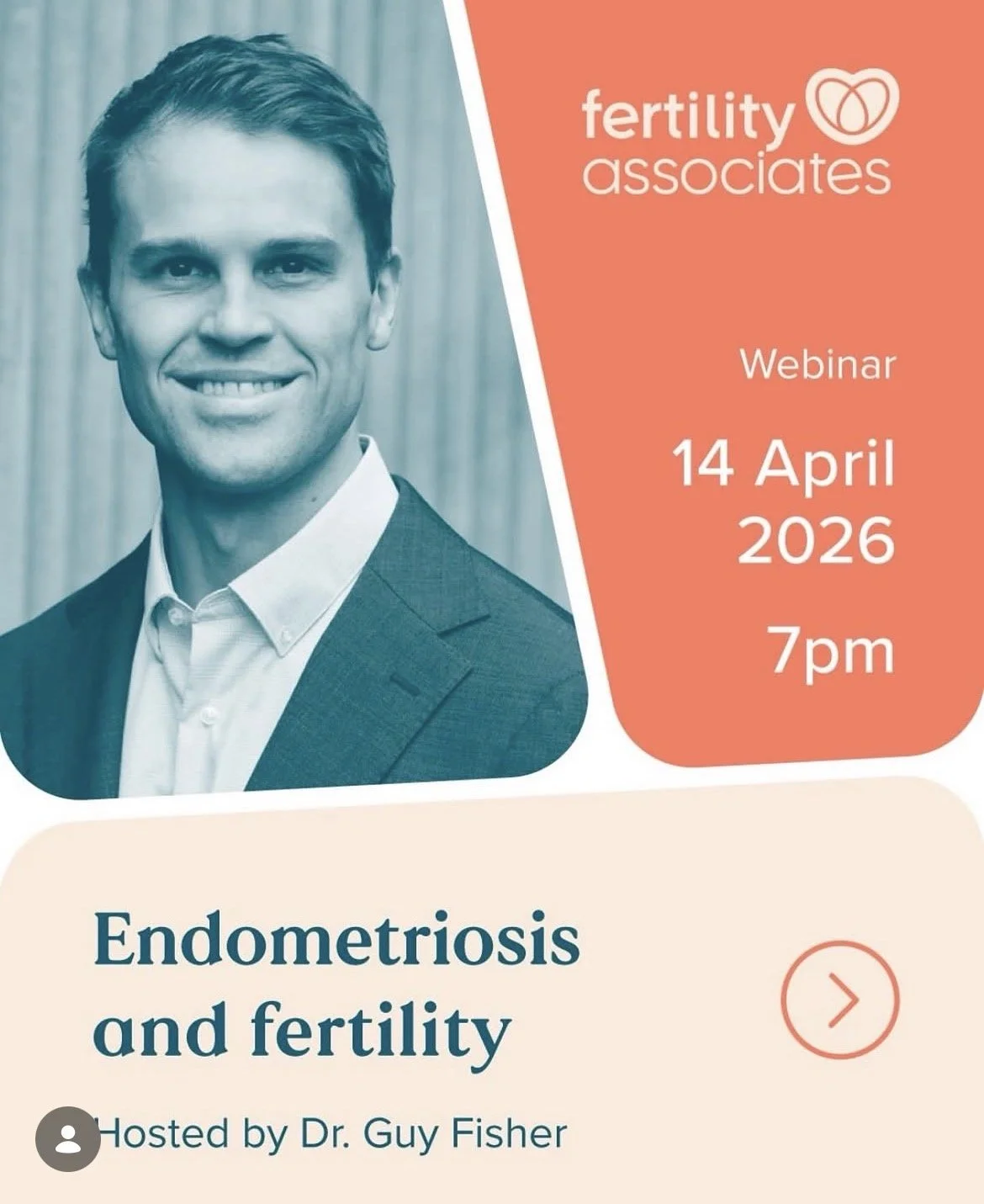
Endometriosis and fertility webinar
If you would like a more detailed explanation, you can watch the full patient webinar below.
👉 Watch the endometriosis and fertility webinar
Key topics covered:
How endometriosis affects fertility
When to investigate
The role of ultrasound
When surgery may help
When IVF is the better option
Endometriosis and fertility: common questions
-
Endometriosis can affect fertility in several ways, including inflammation, distortion of pelvic anatomy, and reduced egg or embryo quality. However, many women with endometriosis are still able to conceive, either naturally or with treatment.
-
You should consider specialist assessment if you have symptoms of endometriosis and are having difficulty conceiving, or if you have known endometriosis and are planning pregnancy. Early assessment can help guide the most appropriate pathway.
-
Diagnosis may involve a detailed clinical assessment and advanced pelvic ultrasound. In many cases, endometriosis can be identified without surgery, particularly when performed by a specialist with expertise in gynaecological ultrasound.
-
Yes.
A normal ultrasound does not exclude endometriosis, particularly more subtle or superficial disease.
A more detailed, specialist ultrasound — combined with your symptoms — can provide a clearer picture and guide next steps.
-
Treatment can improve fertility in selected cases, particularly when disease is affecting pelvic anatomy or causing significant inflammation. The decision to treat surgically or medically is individualised.
-
IVF can be very effective for women with endometriosis, particularly when other factors are contributing to infertility. The approach may be adjusted depending on ovarian reserve, disease severity, and previous treatment.
-
Not always.
Surgery to remove an endometrioma does not usually improve IVF success rates and can reduce ovarian reserve.
In many cases, IVF is recommended first, particularly if fertility is the priority.
Book an assessment
If you have endometriosis and are trying to conceive — or are unsure what to do next — you can book a comprehensive assessment.